 |
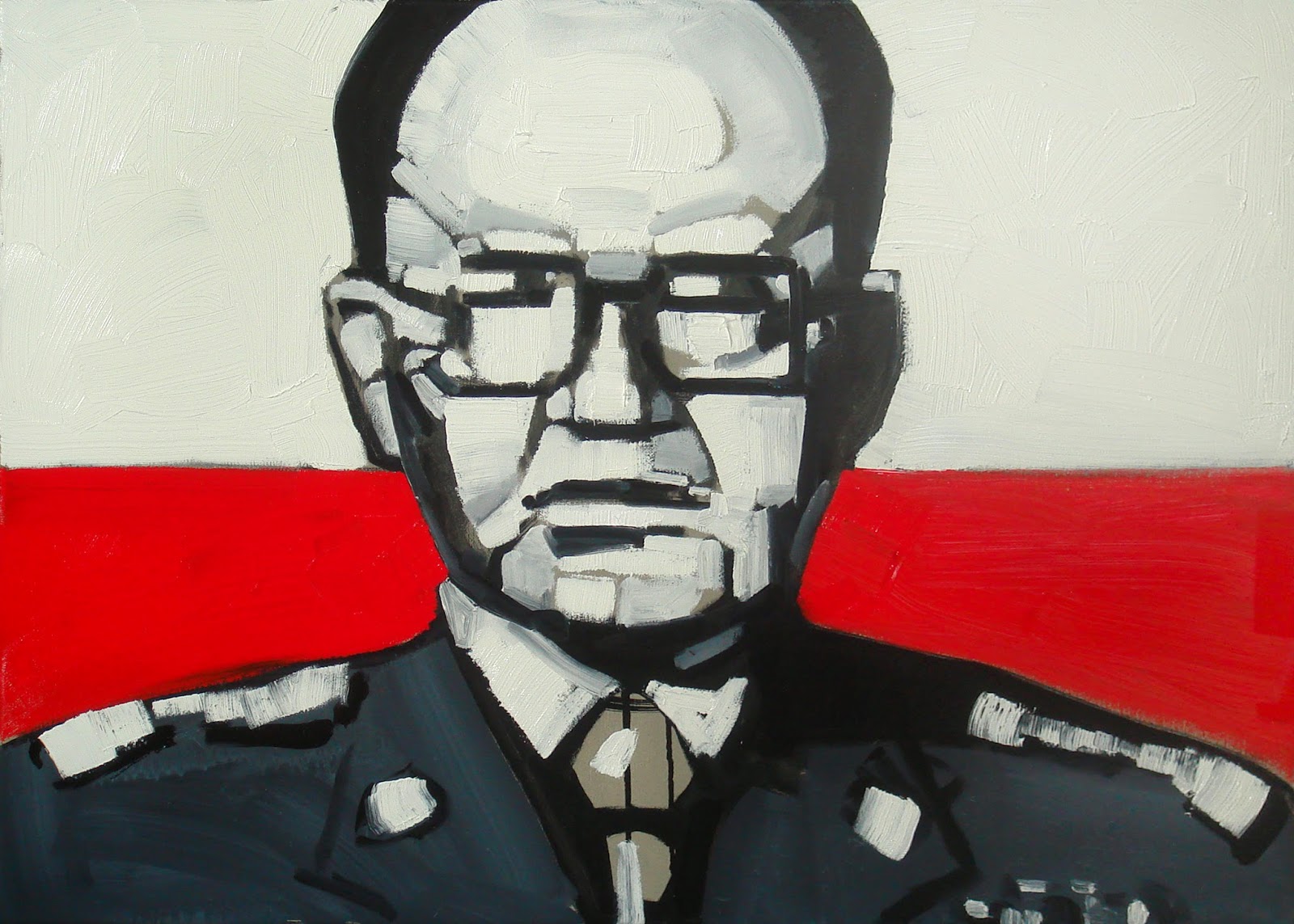
| Whielki Krasnal "Whielcy Polacy / Wojciech Jaruzelski". 18.06.2008. Olej na płótnie. 50 x 70 cm |
May 30, 2014
Pogrzeb generała Wojciecha Jaruzelskiego na Powązkach 30.05.2014


May 15, 2014
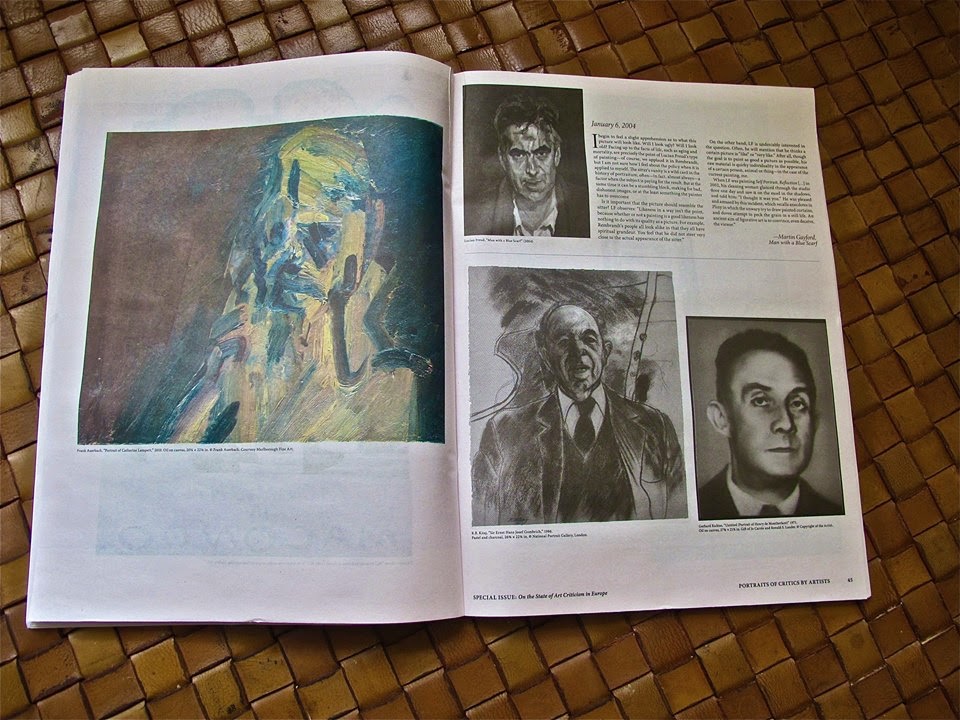
The Krasnals na okładce The Brooklyn Rail.
Special issue of the Brooklyn Rail.
Cover: The Krasnals
http://www.brooklynrail.org/special/ART_CRIT_EUROPE/
This special issue of the Brooklyn Rail introduces AICA (the International Association of Art Critics), founded in Paris as a non-governmental organization affiliated with UNESCO in 1949, to a broader audience in the United States and elsewhere.


Jealousy
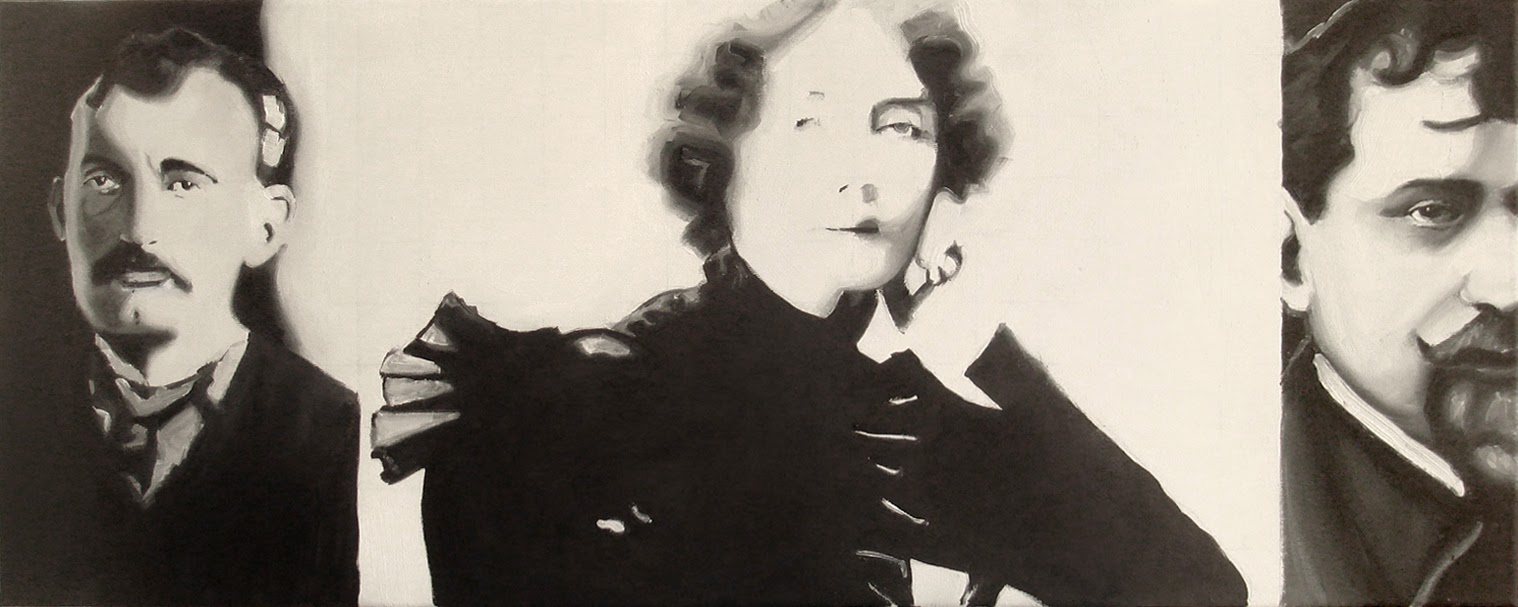 |
| The Krasnals. Whielki Krasnal "Jealousy / Dagny Juel, Edvard Munch, Stanisław Przybyszewski". 2014. Olej na płótnie. 40 x 100 cm |
+.JPG) |
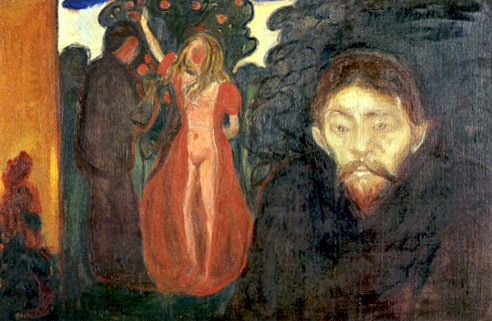
| Edvard Munch "Jealousy". 1907. 75x98 cm |
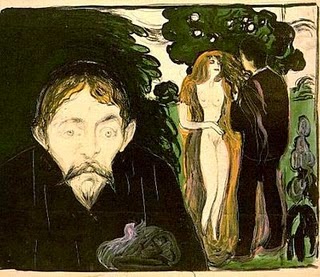 |
| Jealousy, 1896 Lithograph 46.5 x 56.5 cm |
The gloomy-looking figure gazing out of this scene is Munch's friend, the Polish writer Stanislaw Przybyszewski. Munch had an affair with his friend's wife, which is what the imagery refers to. The lithograph relates to a similar painting by Munch of 1895, in which the nude female figure picks an apple from the tree behind her - a reference to the temptation of Adam by Eve. Munch was simultaneously attracted to, fearful of, and puzzled by women. These conflicting feelings are presented in his art: desire is tinged with pessimism, anxiety and melancholy.
http://gundersencollection.com/index.php/gundersen-collection-munch-articles/17-munch-jealousy-2
A large number of sketches and drafts resulted in the painting we now know as Jealousy. It was painted in Berlin in 1895, during the time when he was among the intellectual clique of the city that used to frequent the wine bar Zum schwarzen Ferkel. The female centre of attraction of this circle was the modern, emancipated Dagny Juell, who had come to the city in 1893 to study music. After just a few months, she married one of Munch’s friends and the leading figure of the circle, the German-Polish writer Stanislaw Przybyszewski. Many of the men in the group felt attracted by her – including Munch himself and August Strindberg.
The domestic triangles that were in the offing may have inspired Munch to use the motif. The person portrayed displays likenesses with Przybyszewski, who is shown here en face and pushed right forward in the picture surface. The face with the staring eyes is surrounded by a dark surface. Munch wrote about the motif: “A mysterious gaze, that of the jealous man – in these two gimlet eyes, as in a crystal, many reflected images are concentrated – The gaze is enquiring, interested, hateful and full of love – the quintessence of the woman all of them have in common.”ii The basis for his jealousy and dark thoughts, as enacted in his mind, is made clear in the right-hand section of the picture. A lightly clad woman is openly flirting with a male figure – Dagny and Munch?
Both Strindberg and Przybyszewski mentioned Munch’s picture, and the latter dealt with the theme in his own literary works, such as The Vigil (1893) and Overboard (1896). When Munch exhibited the picture in Paris in 1896, Strindberg wrote the following: “Jealousy, the sacred awareness that one’s soul is one’s own, that it abhors being mingled with another man by woman’s agency. Jealousy, a legitimate egoism, born of the instinct to preserve the self and the race. The jealous man says to his rival: ‘Away with you, worthless fellow; you will warm yourself at fires I have kindled; you will inhale my breath from her lips; you will suck my blood and remain my slave, for you will be ruled by my spirit through this woman, who has become your master.’”
http://tomojkawalekpodlogi.blogspot.com/2013_06_01_archive.html
Dagny, norweska piękność, która rozpalała wszystkich napotkanych mężczyzn, nawet homoseksualistów. Rudowłosa, inteligentna, błyskotliwa, mieszanka świętej i ladacznicy, wiejskiej panienki i femme fatale, potrafiła być namiętną kochanką, równym partnerem w dyskusji intelektualnej, kumplem, przyjacielem, żoną i matką. Samodzielna i niezależna, decydowała o swoim życiu w czasach, gdy kobietom odmawiano do tego prawa.
New Nazi Warrior / Infantka Conchita Wurst
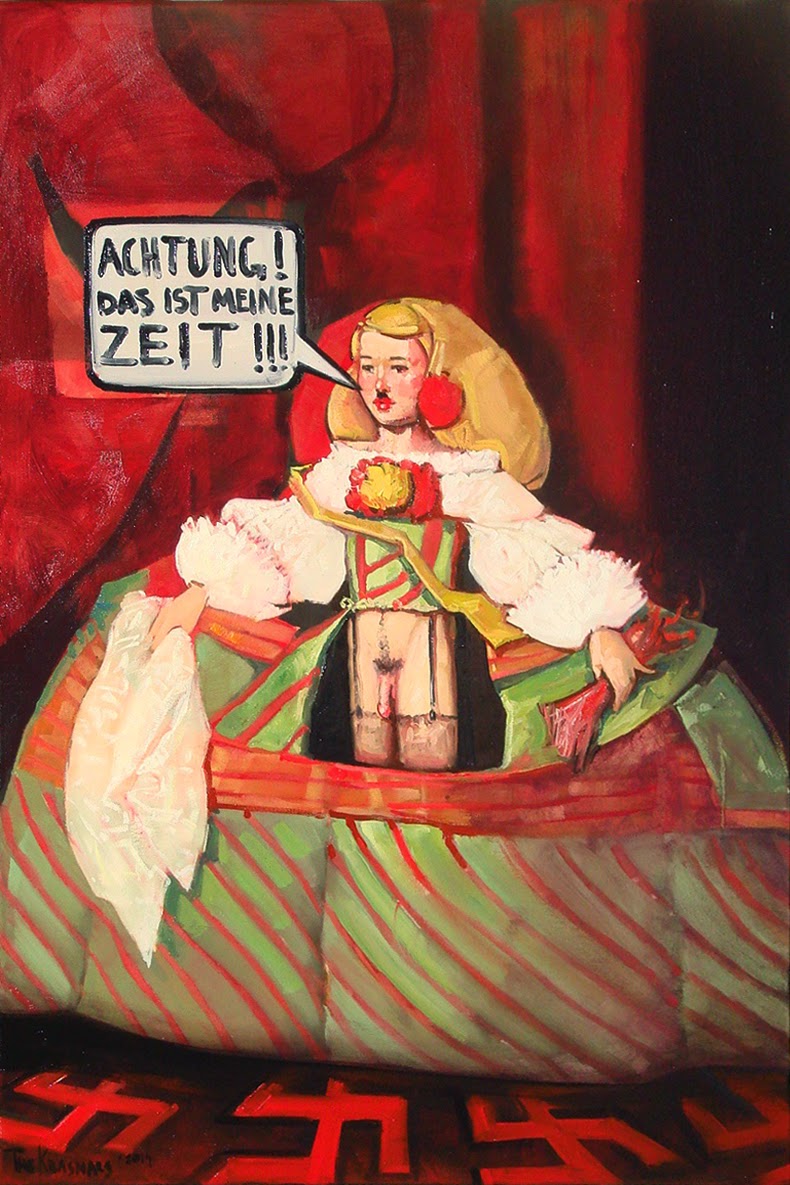 |
The Krasnals. Whielki Krasnal " New Nazi Warrior / Infantka Conchita / z cyklu 'Piękno w Sztuce'". 2014. Olej na płótnie. 90 x 60 cm |
ACHTUNG! New Generation of NAZI WARRIORS – „We are unstoppable”
Nowe oblicze dyktatury - GENDER po trupach do celu.
Jakikolwiek by nie był konkurs, jakość nie ma nic do rzeczy, najważniejsze aby wygrał gej, transwestyta lub lesbijka. Po raz kolejny gwałci się wolność sztuki sprowadzając ją do najniższego poziomu propagandy. Odbiorców traktuje się jak bydło, niezbędną czarną masę, wciskając kit, że ich głos ma jakiekolwiek znaczenie, a konkurs opiera się na zasadach demokratycznych.
Jak tak dalej pójdzie, pojawi się kolejny Hitler a co najmniej Bravick.
Triumf Conchity Wurst nie ma nic wspólnego z tolerancją (drag queen to nie nowość), lecz przede wszystkim z degradacją wartości intelektualnych. Wygrywa fascynacja patetycznym kiczem w kiepskim wykonaniu, w połączeniu z wykorzystaniem kolejnej okazji do medialnej prowokacji, manifestacji polityki genderowej i stoczeniu kolejnej bitwy politycznej. Po raz kolejny perfidne, instrumentalne traktowanie sztuki. Kultura zawsze była znakiem czasów, i zawsze zostawia ślady. Czy stoimy w obliczu zmiany kanonu piękna? Była Mona Lisa, była Marylin Monroe – czy teraz gotowi jesteśmy na dominację kanonu Conchity? Jeśli tak, to uważajmy na przeciwległy biegun. Historia ma to do siebie że lubi się powtarzać. Ten sam kraj wydaje na świat bliźniaki - Hitlera i Conchitę.
Gdzie przebiega granica między tolerancją a dyktaturą?
Pamiętajmy co zrobił Hitler mając jedno jądro, a ta osoba ma dwa, i to jakie!
Jedno trzeba przyznać Wurstowi - że spektakl odegrał perfekcyjnie, doskonale wykonał zadanie polityczne.
May 10, 2014
"My Słowianie" zwycięzcą Eurowizji 2014!
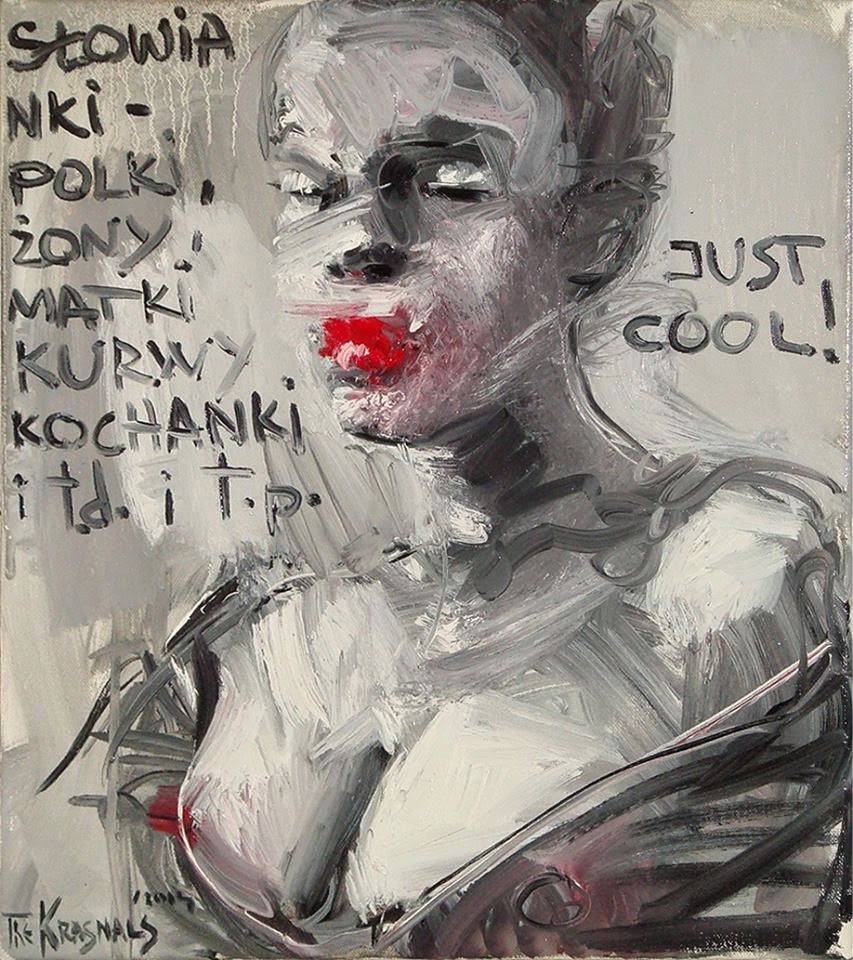 |
| The Krasnals. Whielki Krasnal "My Słowianie". 2014. Olej na płótnie. 45x40cm. |
"My Słowianie" zwycięzcą Eurowizji 2014! Przedstawiciele gender i feminizmu ponieśli sromotną klęskę z miażdżącą siłą energii atawistycznej.
Czyż to nie wspaniały proces redefinicji i ożywienia narodowych symboli?
Czas na nowe oblicze nowoczesnego patriotyzmu!
May 7, 2014
media o "Bitwie pod Grunwaldem TK

Newsweek 5-11.05.2014:


reakcja środowiska sztuki:

decyzja prokuratury:

Subscribe to:
Comments (Atom)