 |
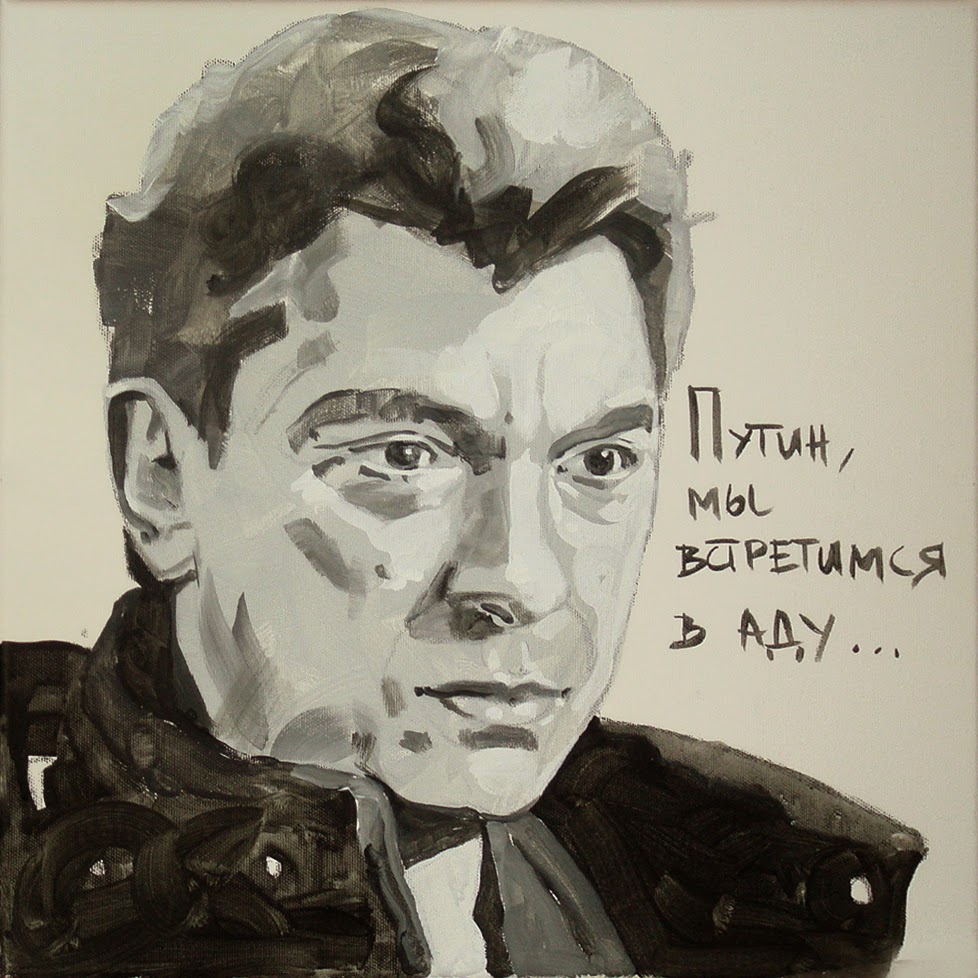
| The Krasnals. Whielki Krasnal "Boris Niemcow / Putin, zobaczymy się w piekle". 2015. Akryl na płótnie. 40 x 40 cm |
Showing posts with label politics. Show all posts
Showing posts with label politics. Show all posts
March 5, 2015
Boris Nemtsov / Бори́с Немцо́в - Путин, мы встретимся в аду... / Putin, we meet in hell...


October 2, 2011
Krytyka Polityczna OBOK propagandy III Rzeszy
Udział The Krasnals w wystawie"OBOK. Polska - Niemcy. 1000 lat sąsiedztwa w Europie"
Używając powracającego na salony języka nowomowy można by zawołać z trybuny: "koleżanki i koledzy, projekt „Polska-Niemcy” to ARCYDZIEŁO będące nowym modelem działalności organizacyjnej wymagającym sprecyzowania i określenia postaw uczestników wobec zadań stawianych przez organizacje!” Słowem, godny następca wytworów hipokryzji romantycznego realizmu III Rzeszy. A jego twórca – spadkobierca idei niegdysiejszego ministra propagandy - Anda Rottenberg, sumiennie kontynuuje dzieło poprzedników. Zaopatrzona w ordery wszelkiej maści, bez skrupułów dowodzi armią swoich podopiecznych, wyrzucając z szeregów i surowo karząc zdrajców jedynie słusznych idei.
Wydarzenie historyczne staje się częściowo traumatyczne wtedy, kiedy dziedziczy wirtualny charakter traumy strukturalnej (zapieczętowanej przez pierwotne wyparcie) w ramach kształtowania się podmiotowości, która nie może wiedzieć nic o tym, co zawsze czekało na to spóźnione uaktywnienie. Ta podwójna struktura wydaje się absolutnie kluczowa.


- The Krasnals / painter from Krupówki “General Anda Rottenberg” / from “The Great Poles”. 2011. Oil on board. 70 x 60 cm
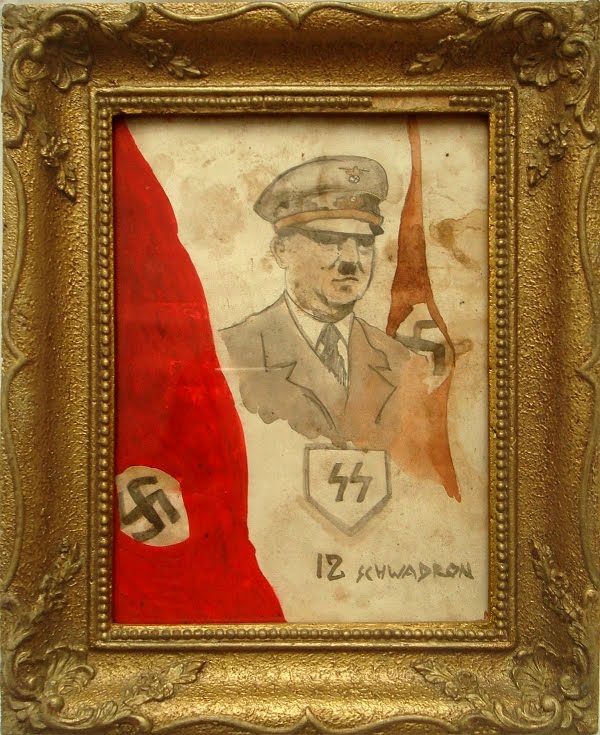
- The Krasnals / malarz nieznany "12 Schwadron". 1939-1942 Tempera, ołówek na papierze
W żadnym wypadku nie poniża się do splamienia swej czystości kontaktem z Entartete Kunst, z obrzydzeniem wołając „Spadajcie!”.

The Krasnals "Entartete Kunst - S(zt)UKA Polska na łańcuchu aksamitnej represji"
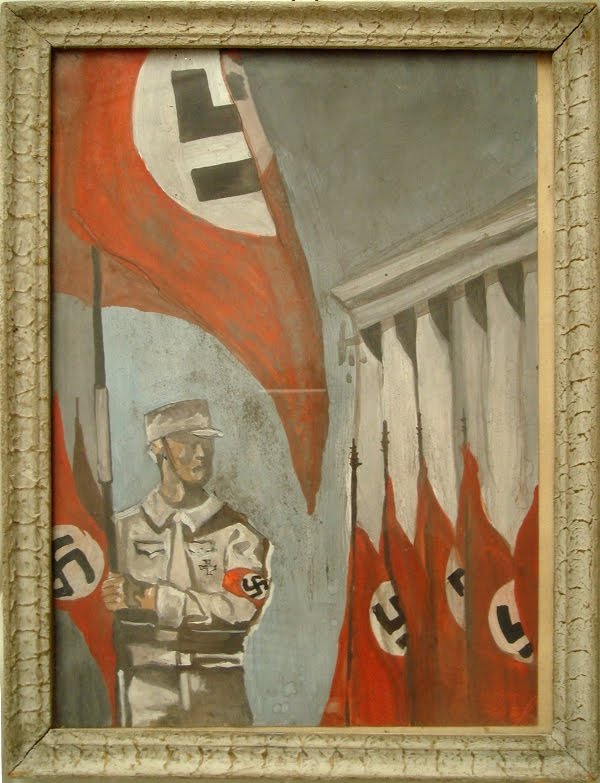
I właśnie – mając na uwadze powyższy kontekst - jest na tej wystawie jeden element który nas zaskoczył… Jednak być może Anda Rottenberg nie jest tak do bólu przewidywalna. Bo nie posądzamy posiadaczki Orła Białego o takie niedopatrzenie i zwykły przypadek. Słynna już flaga Yael Bartany Ruchu Odrodzenia Żydowskiego w Polsce – zestawiona z propagandowym obrazem z czasów III Rzeszy z 1939 roku namalowanym w celach propagandy nazistowskiej! Być może tropem tego zestawienia jest modne ostatnio usadzanie prac współczesnych OBOK dzieł historycznych, aby podkreślić kontynuację i uzasadnione miejsce w najnowszej historii sztuki. Wszak między innymi o to toczy się walka. Z tymże czy takie zestawienie jest rzeczywiście korzystne dla artystki reprezentującej środowisko Krytyki Politycznej? Być może przez przypadek mamy tu do czynienia z niedźwiedzią przysługą która jak na dłoni pokazuje zapędy obecnych środowisk trzymających władzę w kulturze.


- Yael Bartana "Jewish Renaissance Movement in Poland / KunstWerke w Berlinie" 2010
- Nazi propaganda art "Es Lebe das Heilige Deutschland!" 1939. Tempera na papierze
Jedynym plusem tej wystawy, odczytanym między wierszami, jest fakt uświadomienia sobie, że narzędzia walki się nie zmieniły. Widzimy już wyraźnie, że propaganda obecnego establishmentu sztuki nie tylko trwa, ale narasta z zawrotną siłą. Narzędzia represji wcale nie słabną, wręcz przeciwnie. Aparat władzy czuje się na tyle stabilnie, że nie kryje się już ze swymi intencjami, mówi jasno i wyraźnie:
Artur Żmijewski: "W demokracji represje są niewidzialne, aksamitne – są nimi milczenie i brak reakcji. Ale są o wiele bardziej skuteczne, bo nie przenoszą krytycznego przesłania artysty.” Zachodnia demokracja jest o wiele bardziej inteligentna, ona zaprasza krytyczne głosy i rozpuszcza je w braku reakcji, w milczeniu, w skrajnej pasywności.
Środowiska uwikłane w politykę często ze względów na większe korzyści finansowe i nieograniczone wpływy z funduszy publicznych, zdecydowanie i bez skrupułów odrzucają tzw. sztukę zdegenerowaną - Entartete Kunst – na rzecz jedynie słusznej sztuki służącej politycznym celom (marketing polityczny) a tym samym budowaniu własnej stabilnej pozycji na rynkach światowych. Celem wystawy Polska-Niemcy było ukazanie znakomitych stosunków między tymi oboma krajami i przypodobanie się Unii Europejskiej w tym ważnym roku prezydencji Polski.


The Krasnals "Tools of Social Change". 2011. Akryl na płótnie
Jako artyści jesteśmy przeciw wszelkim represjom, również tym aksamitnym!

The Krasnals "Jednoręki bandyta". 2011. Olej na płótnie
Żmijewski – szef zbliżającego się Biennale w Berlinie – już zapowiada zdominowanie kolejnej imprezy artystycznej o znaczeniu międzynarodowym przez Krytykę Polityczną. Bez ogródek ogłasza też propagandowe cele sztuki współczesnej, operując językiem nowomowy, znanym dobrze z przeszłości:
Chodzi jednak o to, żeby artyści umieli użyć sztuki w bardziej substancjalny sposób. Żeby starali się przy jej pomocy ugrać konkretnie sformułowane stawki. To jest z mojej strony chęć wzięcia udziału w upolitycznieniu kultury, poprzez wprowadzanie do niej politycznych zadań. Co się oczywiście rozpada się na szereg jednostkowych projektów. W Biennale wezmą udział artyści-dziennikarze, którzy będą informować o rozmaitych wydarzeniach, mówiąc z dobrze zdefiniowanego ideowo stanowiska. Takie działanie formatuje rzeczywistość.
Dobre układy Krytyki Politycznej z obecnym rządem stwarzają jej doskonałe warunki do szerzenia bez ograniczeń własnej propagandy z wykorzystaniem wszelkich narzędzi. Podczas gdy pisma innych opcji politycznych nie otrzymują dofinansowań, Krytyka Polityczna może liczyć na wierne poparcie w tej kwestii. Żmijewski z dumą ogłasza nabycie kolejnego wspaniałego narzędzia: Jednym z projektów Biennale będzie inicjacja działania Klubu KP w Berlinie, wydamy też pierwszy niemiecki numer pisma Krytyki Politycznej. Będzie to dowód na możliwość użycia artystycznej maszynerii dla promowania politycznego środowiska.
Stan odpowiedniej współpracy politycznej potwierdza sama Anda Rottenberg:
cytat z interview, jaki niedawno udzieliła Rottenberg zitty.de:
Zitty: „Teraz pracuje pani (po osunięciu Rottenberg z projektu wystawy w 2006 roku) z powrotem dla Ministerstwa Kultury. Czy polityka się zmieniła, czy pani się zmieniła?”
Rottenberg: „Układ zależy od odpowiedniego ministra. Od 1989 roku, miałam do czynienia z 17 ministrami kultury. Większość z nich nie było szczególnie zadowolonych z mojej działalności i jeden, ultrakonserwatywny, próbowali swoich najlepszych sił, aby się mnie pozbyć. Obecny premier poprosił mnie, żebym powróciła (do projektu Niemcy-Polska). Spojrzalam na niego i muszę powiedzieć: nie mam z nim problemów” i w innym miejscu interview; „On nigdy nie cenzuruje, nie nęka nikogo w celu dostosowania do jego idei. On nawet broni artystów i dyrektorów muzeów przed prasą i innymi krytykami. Tak długo, jak piastuje urząd, jestem bardzo zadowolona”.

The Krasnals. Whielki Krasnal "Ich fahre nach Berlin / Anda Mobile / Dobre stosunki zależą od długości kabla zasilającego z pieniędzy publicznych / Anda Rottenberg z cyklu Whielcy Polacy. 2011. Olej na płycie. 70 x 100 cm
Zapraszamy na fascynującą wycieczkę do Berlina :)

Nasz komentarz stanowi udział The Krasnals w wystawie "OBOK. Polska - Niemcy. 1000 lat sąsiedztwa w Europie", jest niezbędnym elementem uzupełniającym jej przekaz.
.
Używając powracającego na salony języka nowomowy można by zawołać z trybuny: "koleżanki i koledzy, projekt „Polska-Niemcy” to ARCYDZIEŁO będące nowym modelem działalności organizacyjnej wymagającym sprecyzowania i określenia postaw uczestników wobec zadań stawianych przez organizacje!” Słowem, godny następca wytworów hipokryzji romantycznego realizmu III Rzeszy. A jego twórca – spadkobierca idei niegdysiejszego ministra propagandy - Anda Rottenberg, sumiennie kontynuuje dzieło poprzedników. Zaopatrzona w ordery wszelkiej maści, bez skrupułów dowodzi armią swoich podopiecznych, wyrzucając z szeregów i surowo karząc zdrajców jedynie słusznych idei.
Wydarzenie historyczne staje się częściowo traumatyczne wtedy, kiedy dziedziczy wirtualny charakter traumy strukturalnej (zapieczętowanej przez pierwotne wyparcie) w ramach kształtowania się podmiotowości, która nie może wiedzieć nic o tym, co zawsze czekało na to spóźnione uaktywnienie. Ta podwójna struktura wydaje się absolutnie kluczowa.
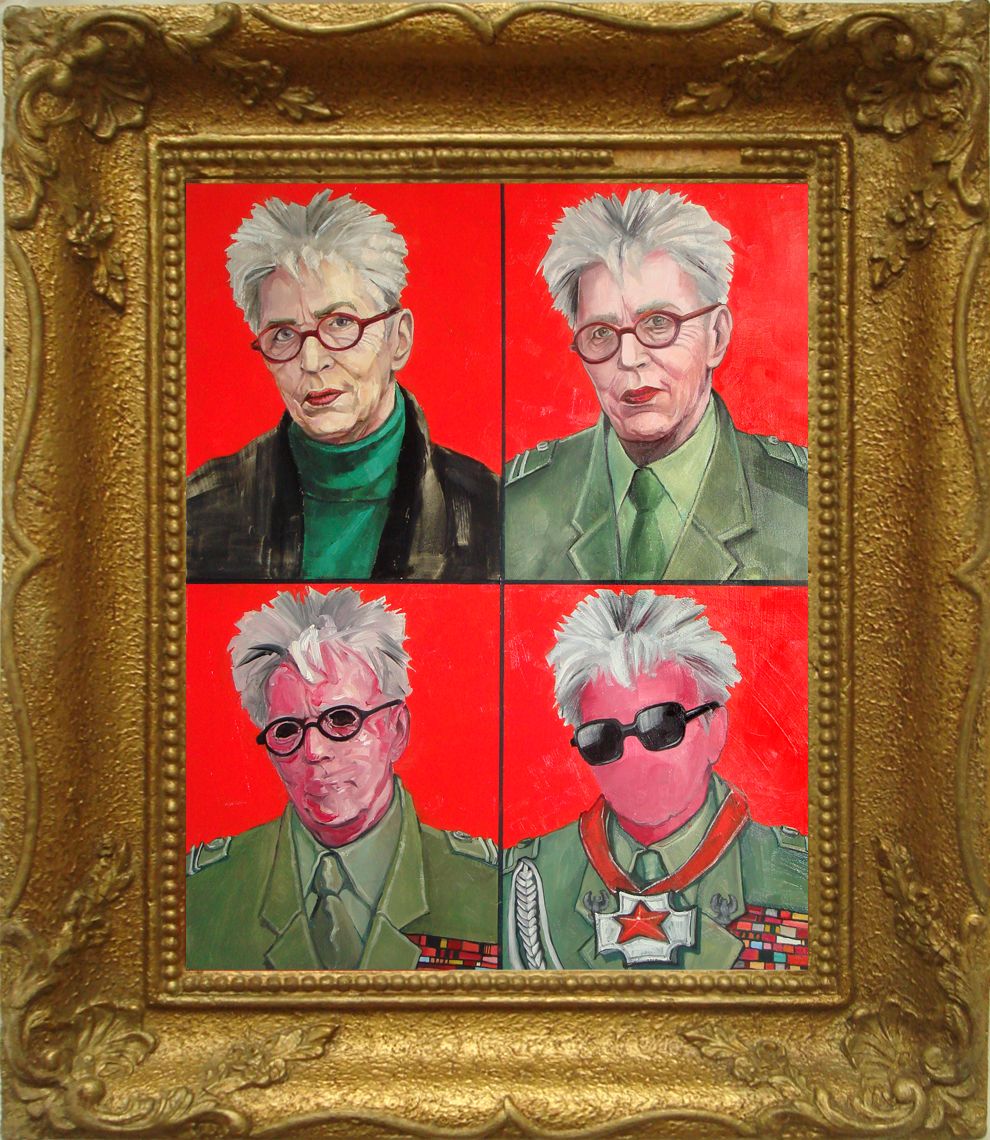
- The Krasnals / painter from Krupówki “General Anda Rottenberg” / from “The Great Poles”. 2011. Oil on board. 70 x 60 cm
- The Krasnals / malarz nieznany "12 Schwadron". 1939-1942 Tempera, ołówek na papierze
W żadnym wypadku nie poniża się do splamienia swej czystości kontaktem z Entartete Kunst, z obrzydzeniem wołając „Spadajcie!”.
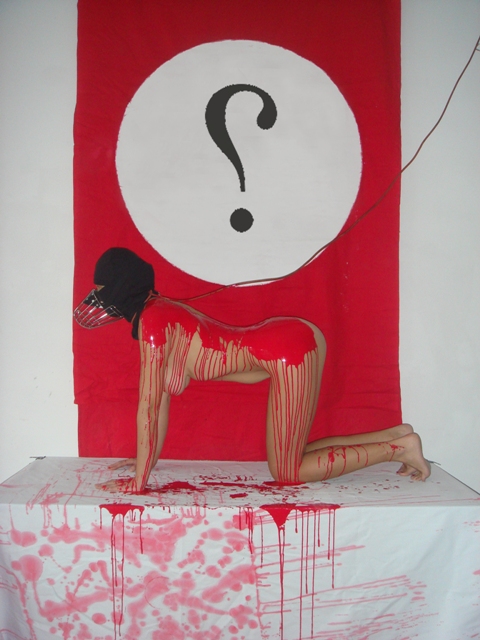
The Krasnals "Entartete Kunst - S(zt)UKA Polska na łańcuchu aksamitnej represji"
I właśnie – mając na uwadze powyższy kontekst - jest na tej wystawie jeden element który nas zaskoczył… Jednak być może Anda Rottenberg nie jest tak do bólu przewidywalna. Bo nie posądzamy posiadaczki Orła Białego o takie niedopatrzenie i zwykły przypadek. Słynna już flaga Yael Bartany Ruchu Odrodzenia Żydowskiego w Polsce – zestawiona z propagandowym obrazem z czasów III Rzeszy z 1939 roku namalowanym w celach propagandy nazistowskiej! Być może tropem tego zestawienia jest modne ostatnio usadzanie prac współczesnych OBOK dzieł historycznych, aby podkreślić kontynuację i uzasadnione miejsce w najnowszej historii sztuki. Wszak między innymi o to toczy się walka. Z tymże czy takie zestawienie jest rzeczywiście korzystne dla artystki reprezentującej środowisko Krytyki Politycznej? Być może przez przypadek mamy tu do czynienia z niedźwiedzią przysługą która jak na dłoni pokazuje zapędy obecnych środowisk trzymających władzę w kulturze.
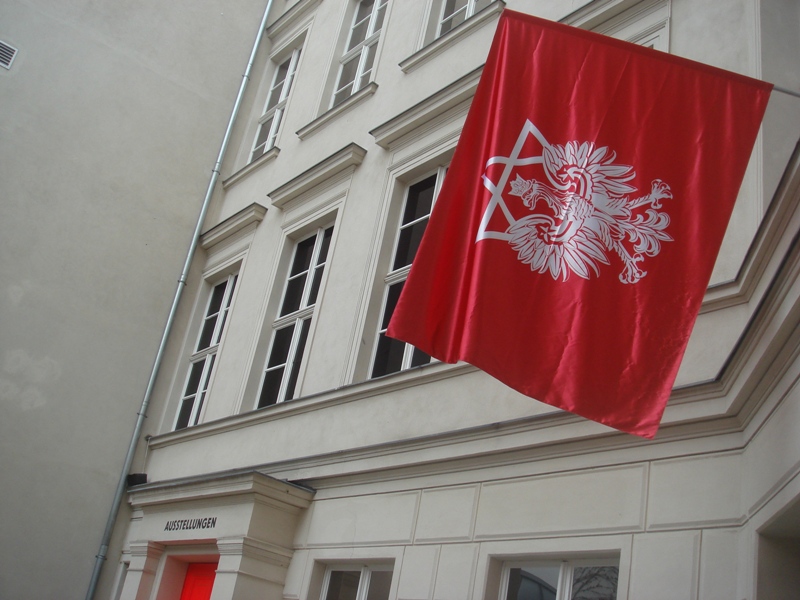
- Yael Bartana "Jewish Renaissance Movement in Poland / KunstWerke w Berlinie" 2010
- Nazi propaganda art "Es Lebe das Heilige Deutschland!" 1939. Tempera na papierze
Jedynym plusem tej wystawy, odczytanym między wierszami, jest fakt uświadomienia sobie, że narzędzia walki się nie zmieniły. Widzimy już wyraźnie, że propaganda obecnego establishmentu sztuki nie tylko trwa, ale narasta z zawrotną siłą. Narzędzia represji wcale nie słabną, wręcz przeciwnie. Aparat władzy czuje się na tyle stabilnie, że nie kryje się już ze swymi intencjami, mówi jasno i wyraźnie:
Artur Żmijewski: "W demokracji represje są niewidzialne, aksamitne – są nimi milczenie i brak reakcji. Ale są o wiele bardziej skuteczne, bo nie przenoszą krytycznego przesłania artysty.” Zachodnia demokracja jest o wiele bardziej inteligentna, ona zaprasza krytyczne głosy i rozpuszcza je w braku reakcji, w milczeniu, w skrajnej pasywności.
Środowiska uwikłane w politykę często ze względów na większe korzyści finansowe i nieograniczone wpływy z funduszy publicznych, zdecydowanie i bez skrupułów odrzucają tzw. sztukę zdegenerowaną - Entartete Kunst – na rzecz jedynie słusznej sztuki służącej politycznym celom (marketing polityczny) a tym samym budowaniu własnej stabilnej pozycji na rynkach światowych. Celem wystawy Polska-Niemcy było ukazanie znakomitych stosunków między tymi oboma krajami i przypodobanie się Unii Europejskiej w tym ważnym roku prezydencji Polski.

The Krasnals. Whielki Krasnal „Polska Prezydencja w Unii Europejskiej / Nie mogę ci wiele dać. ” 2011. Olej na płótnie. 70 x 100 cm
"Polish Presidency in EU / I can't give you too much." 2011. Oil on canvas.
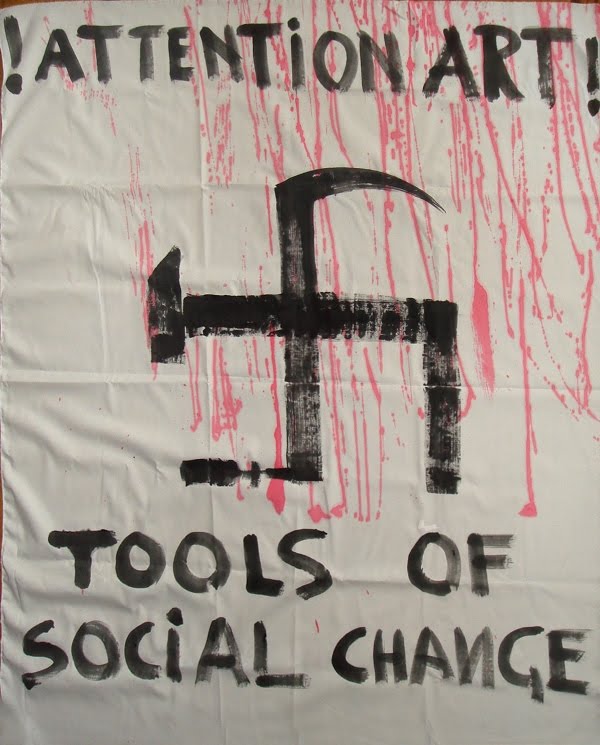
The Krasnals "Tools of Social Change". 2011. Akryl na płótnie
Jako artyści jesteśmy przeciw wszelkim represjom, również tym aksamitnym!
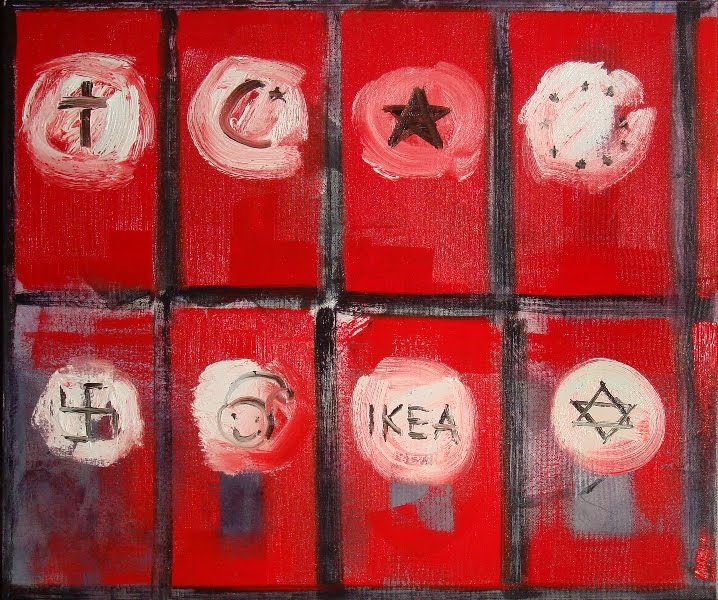
The Krasnals "Jednoręki bandyta". 2011. Olej na płótnie
Żmijewski – szef zbliżającego się Biennale w Berlinie – już zapowiada zdominowanie kolejnej imprezy artystycznej o znaczeniu międzynarodowym przez Krytykę Polityczną. Bez ogródek ogłasza też propagandowe cele sztuki współczesnej, operując językiem nowomowy, znanym dobrze z przeszłości:
Chodzi jednak o to, żeby artyści umieli użyć sztuki w bardziej substancjalny sposób. Żeby starali się przy jej pomocy ugrać konkretnie sformułowane stawki. To jest z mojej strony chęć wzięcia udziału w upolitycznieniu kultury, poprzez wprowadzanie do niej politycznych zadań. Co się oczywiście rozpada się na szereg jednostkowych projektów. W Biennale wezmą udział artyści-dziennikarze, którzy będą informować o rozmaitych wydarzeniach, mówiąc z dobrze zdefiniowanego ideowo stanowiska. Takie działanie formatuje rzeczywistość.
Dobre układy Krytyki Politycznej z obecnym rządem stwarzają jej doskonałe warunki do szerzenia bez ograniczeń własnej propagandy z wykorzystaniem wszelkich narzędzi. Podczas gdy pisma innych opcji politycznych nie otrzymują dofinansowań, Krytyka Polityczna może liczyć na wierne poparcie w tej kwestii. Żmijewski z dumą ogłasza nabycie kolejnego wspaniałego narzędzia: Jednym z projektów Biennale będzie inicjacja działania Klubu KP w Berlinie, wydamy też pierwszy niemiecki numer pisma Krytyki Politycznej. Będzie to dowód na możliwość użycia artystycznej maszynerii dla promowania politycznego środowiska.
Stan odpowiedniej współpracy politycznej potwierdza sama Anda Rottenberg:
cytat z interview, jaki niedawno udzieliła Rottenberg zitty.de:
Zitty: „Teraz pracuje pani (po osunięciu Rottenberg z projektu wystawy w 2006 roku) z powrotem dla Ministerstwa Kultury. Czy polityka się zmieniła, czy pani się zmieniła?”
Rottenberg: „Układ zależy od odpowiedniego ministra. Od 1989 roku, miałam do czynienia z 17 ministrami kultury. Większość z nich nie było szczególnie zadowolonych z mojej działalności i jeden, ultrakonserwatywny, próbowali swoich najlepszych sił, aby się mnie pozbyć. Obecny premier poprosił mnie, żebym powróciła (do projektu Niemcy-Polska). Spojrzalam na niego i muszę powiedzieć: nie mam z nim problemów” i w innym miejscu interview; „On nigdy nie cenzuruje, nie nęka nikogo w celu dostosowania do jego idei. On nawet broni artystów i dyrektorów muzeów przed prasą i innymi krytykami. Tak długo, jak piastuje urząd, jestem bardzo zadowolona”.
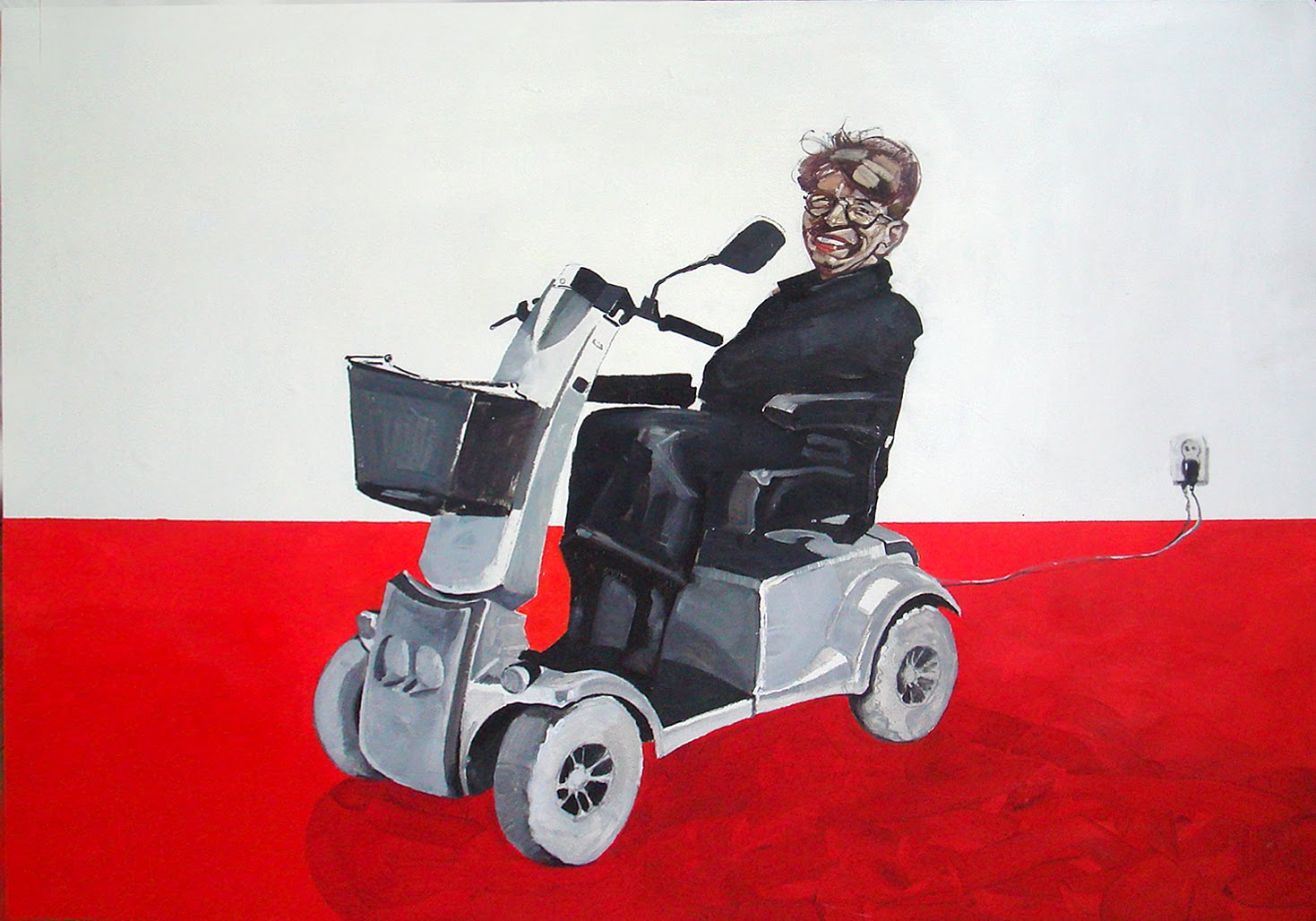
The Krasnals. Whielki Krasnal "Ich fahre nach Berlin / Anda Mobile / Dobre stosunki zależą od długości kabla zasilającego z pieniędzy publicznych / Anda Rottenberg z cyklu Whielcy Polacy. 2011. Olej na płycie. 70 x 100 cm
Zapraszamy na fascynującą wycieczkę do Berlina :)
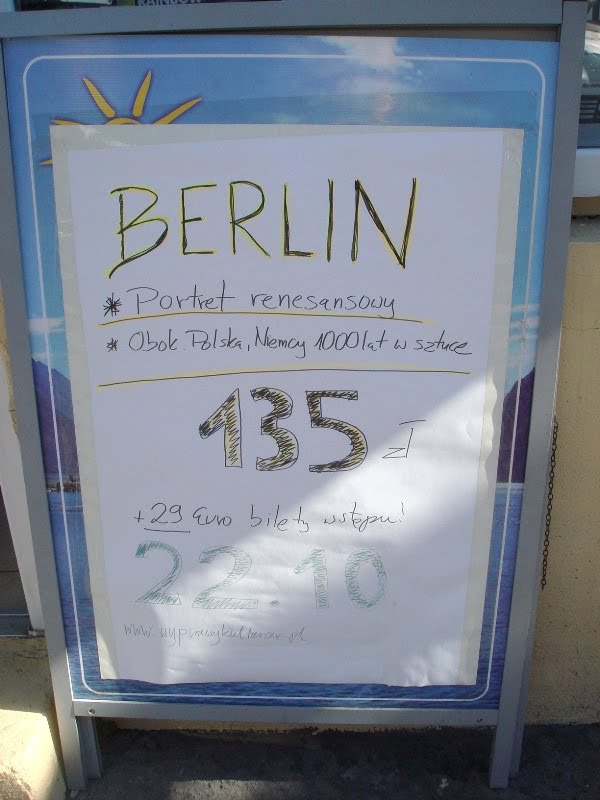
Nasz komentarz stanowi udział The Krasnals w wystawie "OBOK. Polska - Niemcy. 1000 lat sąsiedztwa w Europie", jest niezbędnym elementem uzupełniającym jej przekaz.
.
September 27, 2011
COMMON TASK – I want you for EU Army
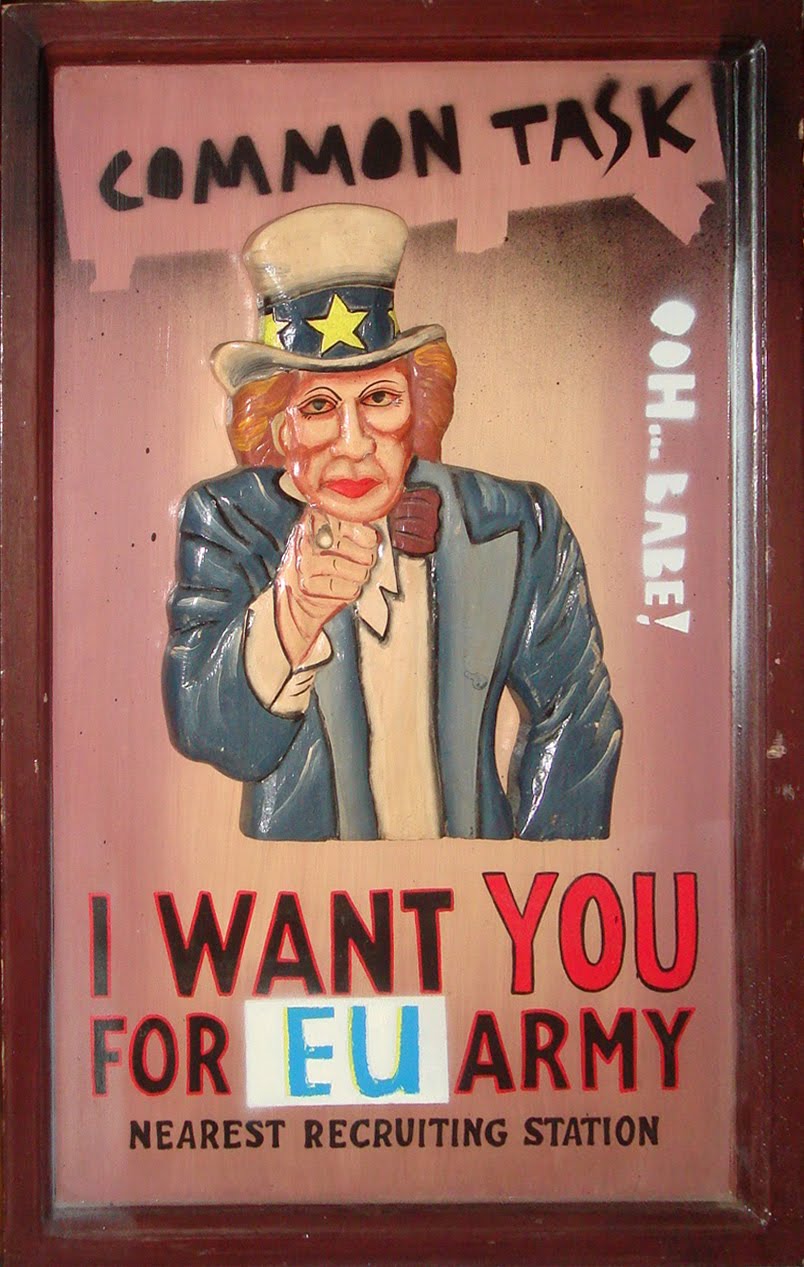
The Krasnals „Ooh babe... I want you for EU Army / Common Task / Tribute to Samuel Wilson, James Mondgomery, Tribute to America and Europe”. 1917/2011. Mixed media on board. 60 x 40 cm
Sztandarowy, podręcznikowy przykład sztuki krytycznej początku XXI wieku stworzony przez grupę The Krasnals. Wykonany zgodnie z normami Unii Europejskiej i na jej terenie (nie w Chinach) dotyczącymi sztuki krytycznej, zrealizowany przez licencjonowanych artystów. UWAGA - projekt nie został sfinansowany ze środków Unii Europejskiej.
Art for Social Change
God bless EU!
.
August 11, 2011
Polska prezydencja w Unii Europejskiej 2011
Europejski Kongres Kultury 2011 8-11.09 2011 Wroclaw
Art for social change
Art for social change
„Polska Prezydencja w Unii Europejskiej / Nie mogę ci wiele dać. ” 2011
"Polish Presidency in EU / I can't give you too much."
Nasz film jest alternatywną prezentacja promująca Polską Prezydencję w Unii Europejskiej - Oficjalna wersja zamowiona przez polskie wladze to film Tomka Baginskiego http://www.youtube.com/watch?v=pXGf9MjkGbM
Ktory film zdaniem panstwa lepiej prezentuje ( promuje) nasz kraj?
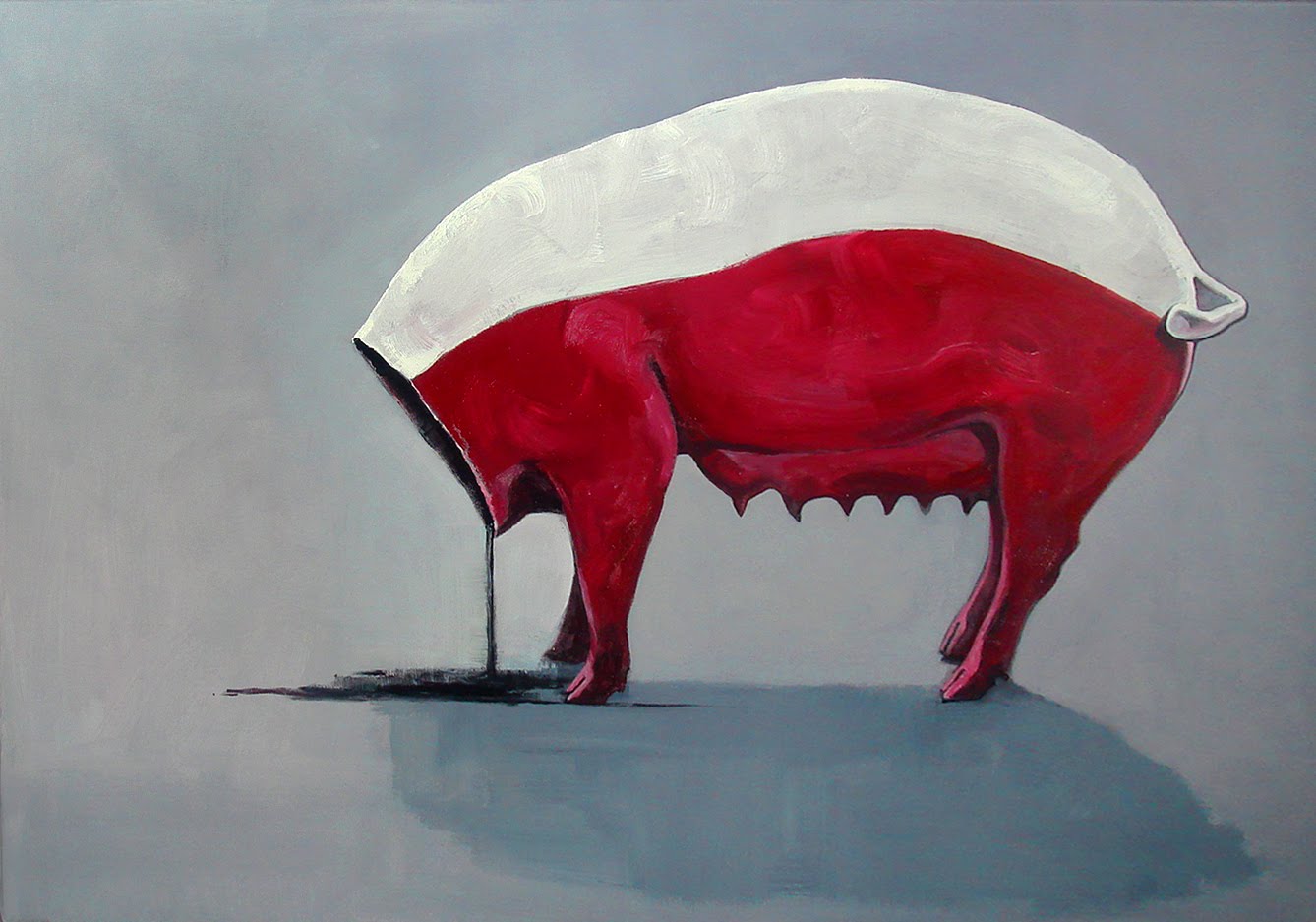
„Polska Prezydencja w Unii Europejskiej / Nie mogę ci wiele dać. ” 2011. Olej na plotnie. 70 x 100 cm
"Polish Presidency in EU / I can't give you too much." 2011. Oil on canvas.
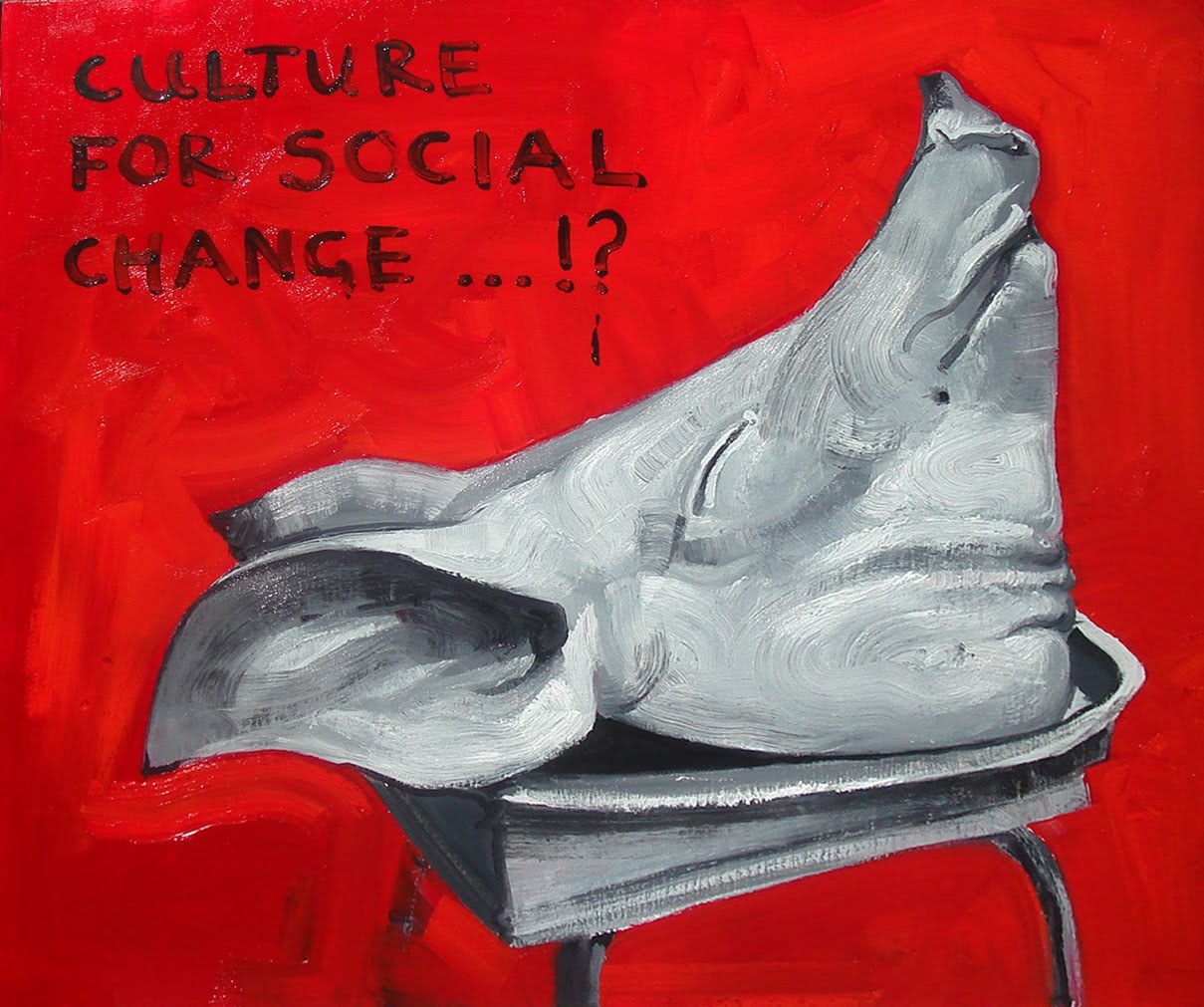
„Polska Prezydencja w Unii Europejskiej / Nie mogę ci wiele dać. 2 ” 2011. Olej na plycie. 46 x 55 cm
"Polish Presidency in EU / I can't give you too much. 2" 2011. Oil on hardboard.
.
May 28, 2011
"Pole lifting meteorite from pope. 21:37" - release
The Krasnals at 54th Venice Biennale - Wroclaw 05.2011


May 27, 2011
The Krasnals at 54th Venice Biennale
The Krasnals at 54th Venice Biennale
Pole lifting mmeteorite from pope. 21:37

Museums Night in Wrocław
14 May, 19.00-00.30
Centrum Sztuki Impart, ul. Mazowiecka 17, Wrocław
Curators: Ewelina Jarosz, Krzysztof Dziedzic
.
Hey, hey, goodby! Killing Osama Bin Laden

The Krasnals. Whielki Krasnal "Dead or alive or just propaganda. Most important - dead. God bless America! / Osama bin Laden". 2011. Oil on canvas. Fragment of a big painting.
.
April 13, 2011
"Polish - Polish War"
The Krasnals & Magdalena Abakanowicz "UNRECOGNISED: 1940 Katyn / 10 April 2010 Smolensk"
February 7, 2011
Egyptian revolutionary

The Krasnals. Whielki Krasnal "Egyptian revolutionary 19:39". 2010. Oil on hardboard 50 x 70 cm
.
Egyptian revolutionary
The Krasnals. Whielki Krasnal "Egyptian revolutionary 19:39". 2010. Oil on hardboard 50 x 70 cm
February 1, 2011
EGIPT - NEFERTITI

Nefertiti
The Krasnals. "Please...! Take me back to EGYPT! / Nefertiti". 2011. Stencil, canvas. 21 x 15 cm
Nefertiti, Neues Museum, Museum Island Berlin, Hosini Mubarak, Egypt revolution
.
The Krasnals exclusive interview with the queen NEFERTITI
Ready for leadership
For Nefertiti, it is a chance to shake off her image as an elitist who is out of touch after years of being abroad.
Speaking to The Krasnals reporter still being held in Neue Museum in Berlin, Nefertiti said:
“This is a critical time in the life of Egypt and I have to come to participate with the Egyptian people,"
"If people, in particular young people, ... want me to lead the transition, I will not let them down. My priority right now ... is to see a new regime and to see a new Egypt through peaceful transition."
"We're still reaching out to the regime to work with them for the process of change. Every Egyptian doesn't want to see the country going into violence," she said. "Our hand is outstretched."
"I wish that we didn't have to go to the streets to impress on the regime that they need to change," queen Nefertiti said. "There is no going back. I hope the regime stops the violence, stops detaining people, stops torturing people."
We asked Egyptians why the presence of Nefertiti is so important for them now:
"We need our beloved Queen Nefertiti to lead us to the change we want, for the regime to fall and Mubarak to leave and for a new, free Egypt to be born!"
.
Egyptian Antiquities in Peril; Troops Guard Museum
That breach, on Friday night, galvanized a contingent of impassioned defenders who have pledged to keep plunderers at bay. Some have been outside the museum since word of the first attack, determined to protect the country’s cultural patrimony.
“It’s the heart of our civilization,” said thirty-two-year-old Ali Said, perspiring in the noonday heat as he stood guard outside the museum Tuesday, arms linked with those of men standing beside him. “And it’s not just for us; it belongs to the entire world.”
.
EGIPT - NEFERTITI
Nefertiti
The Krasnals. "Please...! Take me back to EGYPT! / Nefertiti". 2011. Stencil, canvas. 21 x 15 cm
Nefertiti, Neues Museum, Museum Island Berlin, Hosini Mubarak, Egypt revolution
The Krasnals exclusive interview with the queen NEFERTITI
Ready for leadership
For Nefertiti, it is a chance to shake off her image as an elitist who is out of touch after years of being abroad.
Speaking to The Krasnals reporter still being held in Neue Museum in Berlin, Nefertiti said:
“This is a critical time in the life of Egypt and I have to come to participate with the Egyptian people,"
"If people, in particular young people, ... want me to lead the transition, I will not let them down. My priority right now ... is to see a new regime and to see a new Egypt through peaceful transition."
"We're still reaching out to the regime to work with them for the process of change. Every Egyptian doesn't want to see the country going into violence," she said. "Our hand is outstretched."
"I wish that we didn't have to go to the streets to impress on the regime that they need to change," queen Nefertiti said. "There is no going back. I hope the regime stops the violence, stops detaining people, stops torturing people."
We asked Egyptians why the presence of Nefertiti is so important for them now:
"We need our beloved Queen Nefertiti to lead us to the change we want, for the regime to fall and Mubarak to leave and for a new, free Egypt to be born!"
Egyptian Antiquities in Peril; Troops Guard Museum
That breach, on Friday night, galvanized a contingent of impassioned defenders who have pledged to keep plunderers at bay. Some have been outside the museum since word of the first attack, determined to protect the country’s cultural patrimony.
“It’s the heart of our civilization,” said thirty-two-year-old Ali Said, perspiring in the noonday heat as he stood guard outside the museum Tuesday, arms linked with those of men standing beside him. “And it’s not just for us; it belongs to the entire world.”
The Krasnals. "Please...! Take me back to EGYPT! / Nefertiti". 2011. Stencil, canvas. 21 x 15 cm
Nefertiti, Neues Museum, Museum Island Berlin, Hosini Mubarak, Egypt revolution
The Krasnals exclusive interview with the queen NEFERTITI
Ready for leadership
For Nefertiti, it is a chance to shake off her image as an elitist who is out of touch after years of being abroad.
Speaking to The Krasnals reporter still being held in Neue Museum in Berlin, Nefertiti said:
“This is a critical time in the life of Egypt and I have to come to participate with the Egyptian people,"
"If people, in particular young people, ... want me to lead the transition, I will not let them down. My priority right now ... is to see a new regime and to see a new Egypt through peaceful transition."
"We're still reaching out to the regime to work with them for the process of change. Every Egyptian doesn't want to see the country going into violence," she said. "Our hand is outstretched."
"I wish that we didn't have to go to the streets to impress on the regime that they need to change," queen Nefertiti said. "There is no going back. I hope the regime stops the violence, stops detaining people, stops torturing people."
We asked Egyptians why the presence of Nefertiti is so important for them now:
"We need our beloved Queen Nefertiti to lead us to the change we want, for the regime to fall and Mubarak to leave and for a new, free Egypt to be born!"
Egyptian Antiquities in Peril; Troops Guard Museum
That breach, on Friday night, galvanized a contingent of impassioned defenders who have pledged to keep plunderers at bay. Some have been outside the museum since word of the first attack, determined to protect the country’s cultural patrimony.
“It’s the heart of our civilization,” said thirty-two-year-old Ali Said, perspiring in the noonday heat as he stood guard outside the museum Tuesday, arms linked with those of men standing beside him. “And it’s not just for us; it belongs to the entire world.”
October 31, 2010
GÓWNOJADA - wygwizdać niepodległość
31 październik 2010

The Krasnals. Whielki Krasnal "GÓWNOJADA – Śmiercionośna Gra planszowa ”. 2010. Olej na płótnie. 130 x 160 cm
Za Ziemkiewiczem:
“Podwójne standardy? Tak!”
Oto więc kwintesencja: w walce z faszyzmem wolno wszystko. A o tym, co jest faszyzmem, rozstrzygać mają prawo lewicowi bojówkarze nauczeni przez “Wyborczą”, że “patriotyzm jest rodzajem rasizmu”.Tags: Giertych, III RP, Kaczyński, Komorowski, Lepper, PRL, Tusk, Ziemkiewicz, Marsz Niepodległości 11.11.2010, parada równości
October 14, 2010
Obituary of the dissident Liu Xiaobo / Coffin portrait

The Krasnals. Whielki Krasnal "Obituary of the dissident Liu Xiaobo / Coffin portrait". 2010. Oil on canvas. 33 x 43 cm
Liu Xiaobo is a Chinese intellectual, writer, and human rights activist and a political prisoner in China.
During his 4th prison term, he was awarded the 2010 Nobel Peace Prize, for "his long and non-violent struggle for fundamental human rights in China.
Upon hearing about Liu's nomination for the 2010 Nobel Peace Prize, the Chinese foreign ministry warned the Nobel committee not to give Liu the prize, as they said that it would be against Nobel principles.[51] On 8 October 2010 the Nobel Committee awarded Liu the Prize "for his long and non-violent struggle for fundamental human rights in China".[52] The Norwegian Nobel Committee president Thorbjørn Jagland said the choice of Liu as the recipient of the prize had become clear early on in the process.[51]
A banquet to honor Liu Xiaobo for winning the Nobel Peace Prize by 20 plus Chinese netizens, human right lawyers, and academics was abruptly broken up by Beijing police.[61] Other meetings to commemorate the award were prevented by authorities; prominent intellectuals and other dissidents were detained, harassed or put under surveillance.[62]
There were messages of congratulations from the world’s leaders, who called on China to reform its political, legal systems and its constitution and to release Liu. President Ma Ying-jeou of the Republic of China,[63] He also urges Beijing government to free Liu Xiaobo and put forward political reform. [64]European Commission president José Manuel Barroso,[65] The British Foreign Secretary William Hague,[65] U.S. President Barack Obama,[66] and the Dalai Lama were among those who praised the decision, and called for Liu's release.[67]
There was also solidarity with the Chinese view by Venezuelan President Hugo Chavez.[68]
Following the announcement of the Nobel Peace Prize, Liu's wife, Liu Xia, was placed under house arrest.[69] According to Freedom Now, she has not been charged with any offence.[70]
.Obituary of the dissident Liu Xiaobo / Coffin portrait
The Krasnals. Whielki Krasnal "Obituary of the dissident Liu Xiaobo / Coffin portrait". 2010. Oil on canvas. 33 x 43 cm
Liu Xiaobo is a Chinese intellectual, writer, and human rights activist and a political prisoner in China.
During his 4th prison term, he was awarded the 2010 Nobel Peace Prize, for "his long and non-violent struggle for fundamental human rights in China.
Upon hearing about Liu's nomination for the 2010 Nobel Peace Prize, the Chinese foreign ministry warned the Nobel committee not to give Liu the prize, as they said that it would be against Nobel principles. On 8 October 2010 the Nobel Committee awarded Liu the Prize "for his long and non-violent struggle for fundamental human rights in China". The Norwegian Nobel Committee president Thorbjørn Jagland said the choice of Liu as the recipient of the prize had become clear early on in the process.
A banquet to honor Liu Xiaobo for winning the Nobel Peace Prize by 20 plus Chinese netizens, human right lawyers, and academics was abruptly broken up by Beijing police. Other meetings to commemorate the award were prevented by authorities; prominent intellectuals and other dissidents were detained, harassed or put under surveillance.
There were messages of congratulations from the world’s leaders, who called on China to reform its political, legal systems and its constitution and to release Liu. President Ma Ying-jeou of the Republic of China, He also urges Beijing government to free Liu Xiaobo and put forward political reform. European Commission president José Manuel Barroso, The British Foreign Secretary William Hague, U.S. President Barack Obama, and the Dalai Lama were among those who praised the decision, and called for Liu's release.
There was also solidarity with the Chinese view by Venezuelan President Hugo Chavez.
Following the announcement of the Nobel Peace Prize, Liu's wife, Liu Xia, was placed under house arrest. According to Freedom Now, she has not been charged with any offence.
Liu Xiaobo is a Chinese intellectual, writer, and human rights activist and a political prisoner in China.
During his 4th prison term, he was awarded the 2010 Nobel Peace Prize, for "his long and non-violent struggle for fundamental human rights in China.
Upon hearing about Liu's nomination for the 2010 Nobel Peace Prize, the Chinese foreign ministry warned the Nobel committee not to give Liu the prize, as they said that it would be against Nobel principles. On 8 October 2010 the Nobel Committee awarded Liu the Prize "for his long and non-violent struggle for fundamental human rights in China". The Norwegian Nobel Committee president Thorbjørn Jagland said the choice of Liu as the recipient of the prize had become clear early on in the process.
A banquet to honor Liu Xiaobo for winning the Nobel Peace Prize by 20 plus Chinese netizens, human right lawyers, and academics was abruptly broken up by Beijing police. Other meetings to commemorate the award were prevented by authorities; prominent intellectuals and other dissidents were detained, harassed or put under surveillance.
There were messages of congratulations from the world’s leaders, who called on China to reform its political, legal systems and its constitution and to release Liu. President Ma Ying-jeou of the Republic of China, He also urges Beijing government to free Liu Xiaobo and put forward political reform. European Commission president José Manuel Barroso, The British Foreign Secretary William Hague, U.S. President Barack Obama, and the Dalai Lama were among those who praised the decision, and called for Liu's release.
There was also solidarity with the Chinese view by Venezuelan President Hugo Chavez.
Following the announcement of the Nobel Peace Prize, Liu's wife, Liu Xia, was placed under house arrest. According to Freedom Now, she has not been charged with any offence.
September 21, 2010
The Krasnals Voice at 4th ASEM Culture Ministers Meeting in Poznań

Below there is the necessary supplementary information for ASEM Culture Ministers Meeting - from contestation art circles, which in Poland are represented by The Krasnals art collective.

As The Krasnals art collective we are convinced that the 4th ASEM Culture Ministers Meeting in Poznań contributes significantly to a strengthening of cultural awareness among the societies of the 45 parties who participate in the dialogue of European Union and Southeast Asia. We also hope it will inspire the dialogue and the transfer of knowledge and practices, which, in turn will lead to mutual undertakings to defend and protect the cultural treasury form the threats of the contemporary art market.
There are dangers arising from the social transformations accompanying processes of globalization of high culture, especially contemporary art. We urge you to pay attention to the problem that in an interview the Polish Minister of Culture and National Heritage Bogdan Zdrojewski summoned. He noted that "the basic problem that now affects an area of culture in Europe and Asia (and elsewhere), is that of globalization and the flood of low quality of art as the result of interests of a narrow group of art establishment monopolizing the art market."
In the Polish Culture Minister opinion, there is vagueness and commercialization of the mainstream art, including the Polish one following global trends. So far, a certain originality and individuality, taste and style, was the domain of art. Gradually it meets with deprivation of colourfulness and multidimensionality.
One of the problems that worry us is increasingly emerging question about the need for a biennial basis. Or maybe there is a need to develop a new formula of presenting art rebelling against global trends? The activity of our collective follows the main concept of Mediations Biennale in Poznan, which this year is "Beyond" - "beyond the official, mainstream art, and an official language about it." It should be seriously initiated the debate and critic of art market sphere. We should begin to talk about prevailing of divisions, manipulation, and those unclear rules governing the art world, to reconcile its democratic ideals.
Biennale has become one of the most common and effective ways of showing art in the world. International Biennale is not just an exhibition, but mobile capital and art museum all in one. So, the question is, if an international biennial is necessary for the presence of art created locally in a transnational context? If so, what shape the Polish Biennale should take? Should the local tradition be an important element in building an international biennial? What are the consequences of thinking in terms of the presenting biennale of art - and whether it acts in favor of or against the local tradition?
The exhibition of The Krasnals "Two years of fighting" gives complete answers to these questions. It is situated in one of three main bastions of Mediations Biennial - at Szyperska Gallery (till October 10 2010).
August 26, 2010
CITTADINI, MA NON TROPPO
L.I.M.EN - la rivista on-line del gruppo "oltre i confini"
CITTADINI, MA NON TROPPO
http://limen.tn.it/2010/08/20/1068/

The Krasnals. Whielki Krasnal „We want to love the World: We love EU" (Nicolas Sarkozy) / The United Nations Climate Change Conference 2008 / from the series Great Poles”. 2008. Oil on canvas. 60 x 50 cm.
di Massimiliano Vaccari
È questa in sostanza la situazione riservata agli appartenenti alle etnie nomadi dell’Unione Europea.
CITTADINI, MA NON TROPPO
http://limen.tn.it/2010/08/20/1068/

The Krasnals. Whielki Krasnal „We want to love the World: We love EU" (Nicolas Sarkozy) / The United Nations Climate Change Conference 2008 / from the series Great Poles”. 2008. Oil on canvas. 60 x 50 cm.
di Massimiliano Vaccari
È questa in sostanza la situazione riservata agli appartenenti alle etnie nomadi dell’Unione Europea.
Nell’ultimo decennio l’Unione si è allargata sensibilmente verso est, includendo Stati dove molti nomadi hanno cittadinanza. Quindi viene da pensare che per il trattato di Schengen, che regola la libertà di circolazione di servizi, beni e persone (di fatto in quest’ordine), in nome di tutto ciò che è bello e transazionalmente sincero, se sono cittadino di uno stato dell’unione allora devo essere giuridicamente anche cittadino europeo.
Questo non è così per i popoli nomadi che attraversano gli Stati nazionali della gente civile e stanziale.Zingari, zigani, zingani o gitani sono termini generici e spregiativi usati per indicare un insieme di diverse etnie, dette popolazioni romaní che sono in massima parte stanziali e hanno generalmente la cittadinanza del paese in cui vivono. Non c’è alcuna connessione, neppure etimologica, tra il nome “rom” e il nome dello stato della Romania, il popolo di lingua neolatina dei rumeni e la lingua rumena.In Italia tuttavia in relazioni di emanazione ministeriale, come ad esempio gli studi del Ministero dell’Interno, si continua ad utilizzare il termine “zingari” per indicare l’insieme delle etnie e l’aggettivo “romanì” viene utilizzato solo in relazione alla lingua propria dei rom e sinti.
In Europa sono presenti diversi gruppi etnici della popolazione romaní: rom, sinti e kalé (quest’ultima soprattutto in Spagna).
Personalmente mi sono accorto che le ondate di odio e disgusto sociale si riversano quasi esclusivamente su quelle comunità di popolazioni romanì che hanno scelto e stanno portando avanti un preciso obiettivo: il nomadismo.
Il nomadismo ovvero una forma di mobilità scelta da alcune popolazioni legata solitamente alla loro forma di economia, ma che può essere praticata anche per motivi di tradizione storica e culturale, come lo è per alcune popolazioni romanì.
Ed ecco ora l’ultima manifestazione della paura verso i nomadi che sta avvenendo in Francia in questi giorni:Il 19 agosto è partito il primo volo per Bucarest dalla Francia. Poi ce ne sarà un altro il 20, e la settimana dopo un altro ancora per Sofia. Calendario di partenze serrato fino alla fine di settembre, per un totale di 700 rom che saranno espulsi dalla Francia e rimpatriati nei loro Paesi d’origine, Bulgaria e Romania. Anche donne e bambini costretti a fare fagotto, carovane di macchine e roulotte in movimento alle periferie delle città.
Sono almeno seicento le persone da rimandare in patria nel prossimo mese. Si tratta quasi sempre di cittadini comunitari, ma considerati “irregolari”. E qua ti voglio: perché dei cittadini europei dovrebbero essere considerati irregolari? Il principio che si ricava dagli accordi transnazionali europei è che “le limitazioni alla libertà di circolazione sono eccezionali e devono fondarsi su motivi di ordine pubblico, pubblica sicurezza o sanità pubblica”.
In poche parole: no alla gente con caravan e roulotte sospettata di spargere microcriminalità e offese al senso civico e morale, che puzza e non si lava e porta in giro le malattie. La descrizione tipo di un vero e proprio zingaro. Peccato che non siano tutti così, se lo fossero allora potremmo tranquillamente affermare che tutti i francesi sono dei tipi coi baffetti, il basco e un bicchiere di vino rosso in mano.
Lo scorso anno, circa ottomila rom furono rimpatriati in Romania, e ad ognuno vennero dati un biglietto aereo e una somma pari a 300 euro (100 euro in caso di minore).
Per questa ragione, il governo francese ha messo a punto uno schedario biometrico con il quale sarà possibile censire la popolazione rom e impedirne il rientro in caso di espulsione. In poche parole non si potrà ripassare dal via come al monopoli. E così il governo francese passa anche dalla parte dei caritatevoli: ma come vi diamo anche 300 euro a cranio e non vi chiediamo altro che rinunciare ai vostri diritti di cittadini comunitari e di andare a rompere le palle a qualche altro stato con il vostro stupido stile di vita non omologato e voi ancora a protestare? Siete incontentabili.
Negli anni precedenti, molti degli espulsi nel corso di operazioni simili sono riusciti a fare ritorno, potendo circolare liberamente all’interno dell’Unione. L’amarissima ironia di ciò è disarmante: sapere di poter circolare liberamente all’interno dell’unione, ma evidentemente senza avere alcun diritto a fermarsi; in un eterno circolo che li vede sballottati da stato a stato come fossero rifiuti tossici).
Secondo il ministro della Famiglia, Nadine Morano, «le deportazioni servono a dimostrare che non permetteremo più l’esistenza di campi illegali come abbiamo fatto per anni». Un sondaggio ha rivelato che il 79% dei francesi appoggia il pugno di ferro del governo. La stessa immagine di Sarkozy, in caduta libera, è risalita di due punti.
Sarkozy vola alto come i suoi charter di rimpatrio per la Romania.
Amnesty International denunciava nel 2009 la nuova moda delle «deportazion» in Kosovo. «Rimpatri forzati sono attesi dalla Svizzera, dalla Francia e dai Paesi scandinavi», scrive l’organizzazione in difesa dei diritti umani. In Germania ci sono 12mila i rom e altre minoranze pronti a essere spediti in Kosovo nei prossimi mesi.
La Serbia, Paese che aspira all’Europa, manda i budlozer per cancellare i campi alle porte di Belgrado e far posto ai Giochi della gioventù. La nostra gioventù quella bella, quella che si lava e non puzza, quella onesta e sempre giusta.
Sgombri ROM in Europa – (Amnesty)
… e in Italia…
August 12, 2010
Fighting for the cross at the Presidential Palace in Warsaw
.
SURREALISTIC PAINTING - "Dream caused by Flight of the Tupolev around the Presidential Palace in Warsaw a Second Before Awakening / Portrait of Ordinary Pole - Great Poles series."

The Krasnals. Whielki Krasnal "Dream caused by Flight of the Tupolev around the Presidential Palace in Warsaw a Second Before Awakening / Portrait of Ordinary Pole - Great Poles series." 2010. Oil on canvas. 70 x 50 cm
The soul of the marionette is a wooden cross, with strings attached. Animator, depending on the presentation of the concept may be visible, or the contrary. Marionette is manipulated from platform located above the stage, the animator is often dressed in a black costume. Then on a black background only moving doll can be seen . It is often used during playing obscene, street scenes.
In our times Polish people demand longer and longer and more complex shows. It presents, therefore, like nowhere else in the world, the serial presentations of marionettes lasting for days and nights ...

Salvador Dali "Christ of Saint John of the Cross" 1951. Oil on canvas. 205 cm × 116 cm (fragment)

Crucifixion (Corpus Hypercubus) (Corpus Hypercubus ou Crucifixion) 1954, by Salvador Dali, Oil on canvas 194.5 x 124cm

Salvador Dali "Crucifixion - Christ of Gala"
.
SURREALISTIC PAINTING - "Dream caused by Flight of the Tupolev around the Presidential Palace in Warsaw a Second Before Awakening / Portrait of Ordinary Pole - Great Poles series."

The Krasnals. Whielki Krasnal "Dream caused by Flight of the Tupolev around the Presidential Palace in Warsaw a Second Before Awakening / Portrait of Ordinary Pole - Great Poles series." 2010. Oil on canvas. 70 x 50 cm
The soul of the marionette is a wooden cross, with strings attached. Animator, depending on the presentation of the concept may be visible, or the contrary. Marionette is manipulated from platform located above the stage, the animator is often dressed in a black costume. Then on a black background only moving doll can be seen . It is often used during playing obscene, street scenes.
In our times Polish people demand longer and longer and more complex shows. It presents, therefore, like nowhere else in the world, the serial presentations of marionettes lasting for days and nights ...

Salvador Dali "Christ of Saint John of the Cross" 1951. Oil on canvas. 205 cm × 116 cm (fragment)

Crucifixion (Corpus Hypercubus) (Corpus Hypercubus ou Crucifixion) 1954, by Salvador Dali, Oil on canvas 194.5 x 124cm

Salvador Dali "Crucifixion - Christ of Gala"
.
August 2, 2010
Postcard from Greece

The Krasnals. Sleeping Beauty "Aqualand. Greece 2010". 2010. Acrylics on canvas. 70 x 80 cm

The Krasnals. Krasnal Hałabała "Aqualand. Greece 2010". 2010. Art object
We are on the Greek island of Thassos. Stink, filth, lack of fuel ... three days we can't get out, and Aquaparks is empty ... great!
We have imposed a frame memory of Ciechocinek and Thassos, for example, the square in front of the small hotel Sagapo, where we live. And a frame: a postcard, which we found at the white house in the village of Limenas. There was a impressing Aquapark. Underneath the inscription: "Greetings from Thassos." It made an impression on us. It looked like it was printed in Poland, somewhere in the 80s
Keywords: Greece, crisis, strikes, fuel, Rajkowska, Budny.
.
July 29, 2010
Bronisław Komorowski - new president of Poland

The Krasnals. Whielki Krasnal "Object of our contemplation / Bronisław Komorowski, from the series Great Poles". 2010. Oil on canvas. 40 x 60 cm
.
Subscribe to:
Posts (Atom)